Ten Years of Baku: The Race That Reminds You Why We Love Formula 1
There is something special about waking up in Las Vegas on a Saturday morning and, within minutes, being transported more than 7,000 miles away—to the shores of the Caspian Sea, where Formula 1 cars are flying through the ancient streets of Baku.
This weekend marks 10 years since Formula 1 first came to Azerbaijan, and watching today's Grand Prix reminded me why Baku has become one of those races I genuinely look forward to.
Some circuits are legendary because of their history.
Others because of their speed.
Baku somehow gives you both, while looking unlike almost anything else on the Formula 1 calendar.
The City Is Part of the Race
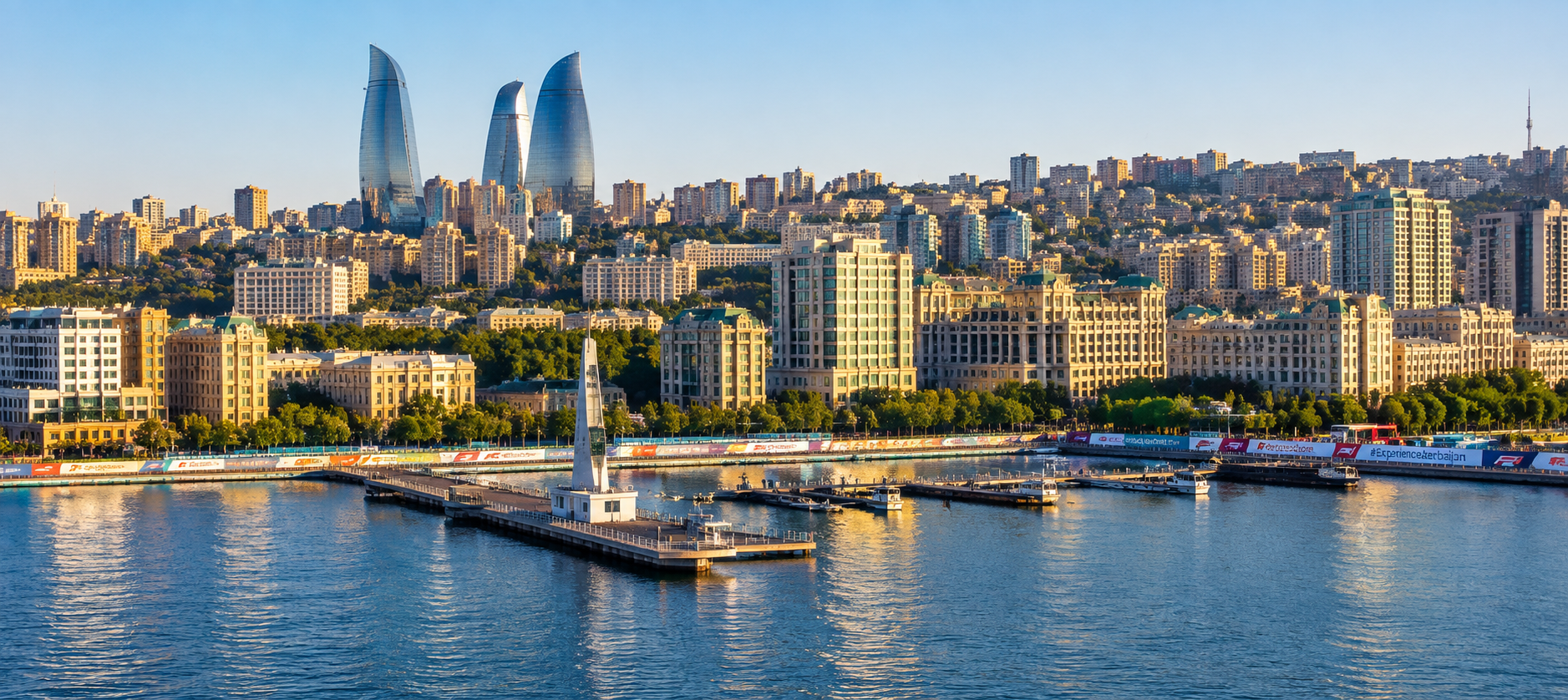
That's what I love about street circuits.
The race doesn't happen somewhere outside the city. The city becomes the racetrack.
In Baku, Formula 1 cars race from the modern waterfront along the Caspian Sea into a UNESCO-listed Old City that has stood for centuries.
And then there is the castle.
Yes, I know.
Technically, it isn't one giant castle—although you could certainly fool me. What we're actually looking at are the medieval fortress walls and towers that once protected Icherisheher, Baku's Old City. Behind those walls is an entire historic city, home to centuries-old buildings, the Palace of the Shirvanshahs and the famous Maiden Tower.
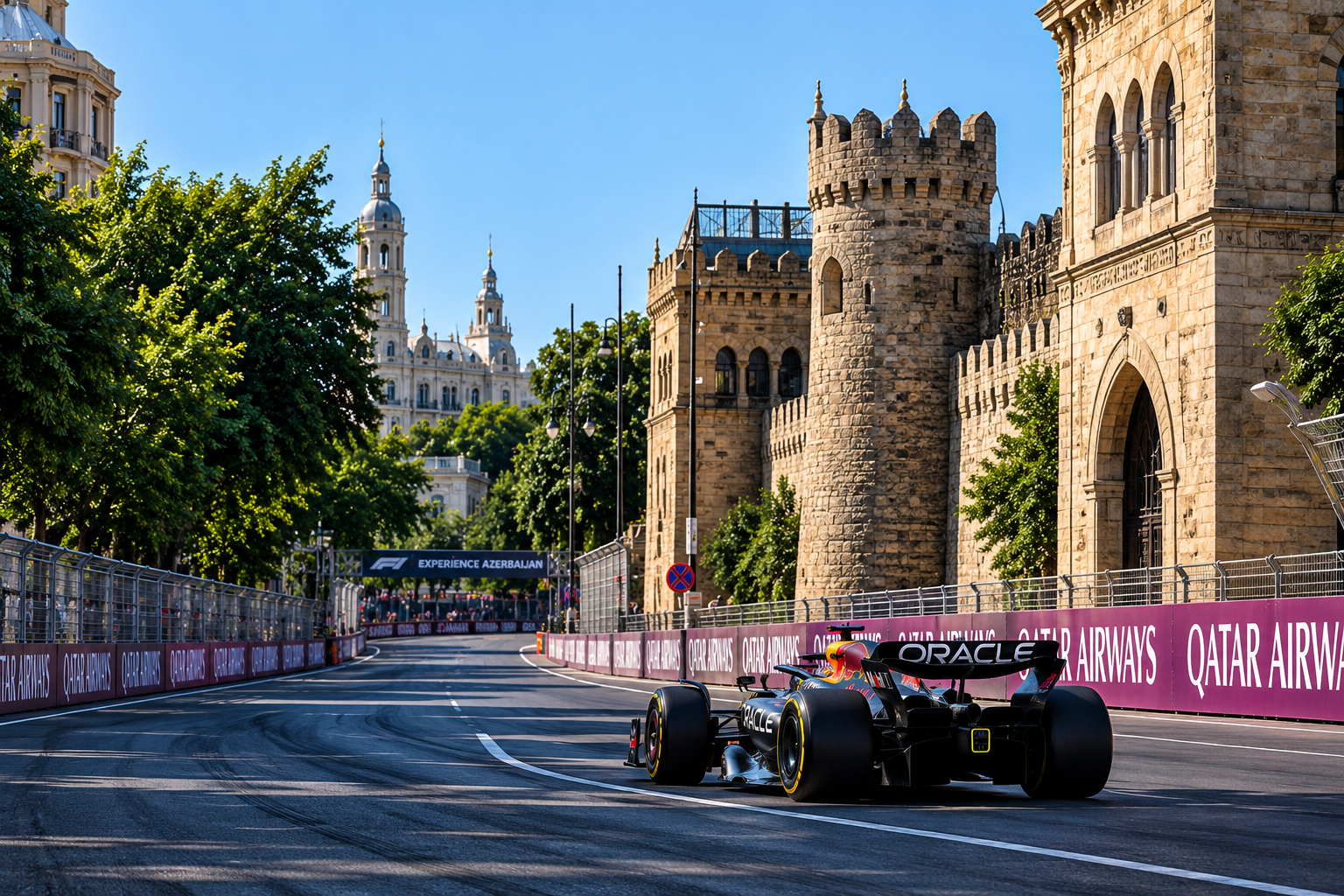
But Formula 1 calls this the Castle Section, and frankly, that's all the permission I need.
Stone walls? Check.
Turrets? Check.
Medieval backdrop with F1 cars flying past? Check.
Call it what you want - we are calling it a castle!
Watching these extraordinarily sophisticated modern machines thread through a section barely wide enough for them, surrounded by ancient stone walls, is such a strange and beautiful contrast.
Then, seconds later, they're unleashed onto one of the fastest stretches of the circuit.
Only Baku.
Ten Years Later, Baku Has Earned Its Place
When Formula 1 first arrived here in 2016, Baku was the unknown newcomer.
A decade later, it has an identity.
You recognize the circuit almost immediately.
The Caspian waterfront. The long straight. The Old City. The castle walls. The incredibly narrow corners.
And, inevitably, the chaos.
Baku has developed a reputation for races that refuse to follow the script. Walls are close. Speeds are enormous. Safety Cars can erase a beautifully constructed lead in seconds.
Today certainly didn't disappoint.
And Then the Race Came Alive
George Russell was putting together an exceptional race.
At one point he had approximately 11 seconds over Oscar Piastri and around 12 seconds over Max Verstappen.
Eleven seconds can feel enormous in Formula 1.
In Baku?
It can disappear instantly.
Alex Albon found the wall.
Safety Car.
Suddenly everyone had decisions to make. Pit strategies changed. Gaps vanished. Antonelli caught the timing beautifully and Russell's comfortable advantage was effectively reset.
And yet Russell kept the lead.
Then racing resumed, and almost immediately Baku reminded everyone that nothing here is guaranteed.
Yellow flags.
Another incident.
Another Safety Car.
The Alpines came together, Norris was caught in the consequences, and suddenly the World Champion's afternoon was over through an incident that developed around him.
You could feel the frustration.
Gasly's reaction said plenty as well.
Then Piastri locked up and lost second.
And somewhere in the middle of all that chaos, the race distilled itself into something wonderfully simple:
George Russell had Max Verstappen behind him.
Very, very close behind him.
And Just When You Thought You Knew How It Would End…
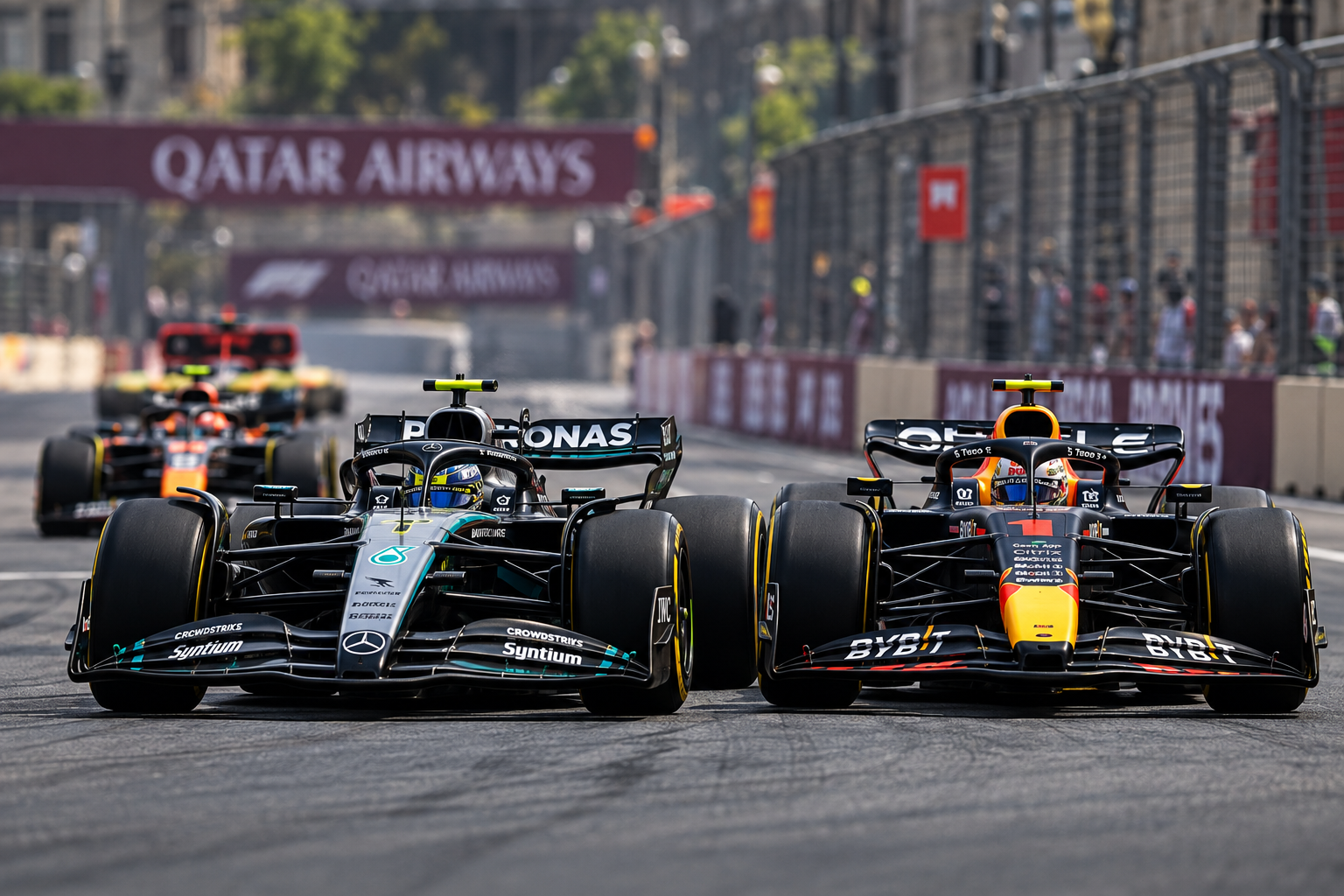
Just when it felt like we knew how this one was going to finish, things got hot.
After the second Safety Car, Max Verstappen was suddenly right behind George Russell—and we know Max. When he has the pace and he's sitting less than a second behind you, you know you're in for a fight.
Lap after lap, Max stayed within striking distance. The gap kept tightening, and Russell had absolutely no room for error. Not because Russell wasn't driving brilliantly-he was-but because having Verstappen that close behind you changes the pressure completely. One small mistake, one imperfect corner, and Max was close enough to take advantage.
But Russell didn't give him that opportunity.
For multiple laps, he kept Max behind him with less than a second separating them. Then came the final lap, and somehow the fight became even tighter, And because this is Baku, there had to be one more moment of uncertainty. Bottas was in the wall. For a second, you couldn't help but wonder - is that it? Yellow flag? Safety Car? Does this incredible fight end here?
But they kept racing.
And the gap kept disappearing.
George Russell crossed the finish line just 0.1 seconds ahead of Max Verstappen. Really…0.1 second, unbelievable, only in Formula 1.
After everything that happened in Baku that day, the race came down to a tenth of a second.
What a finish. And what a drive from Russell under that kind of pressure.
Maybe This Is Why Street Races Feel Different
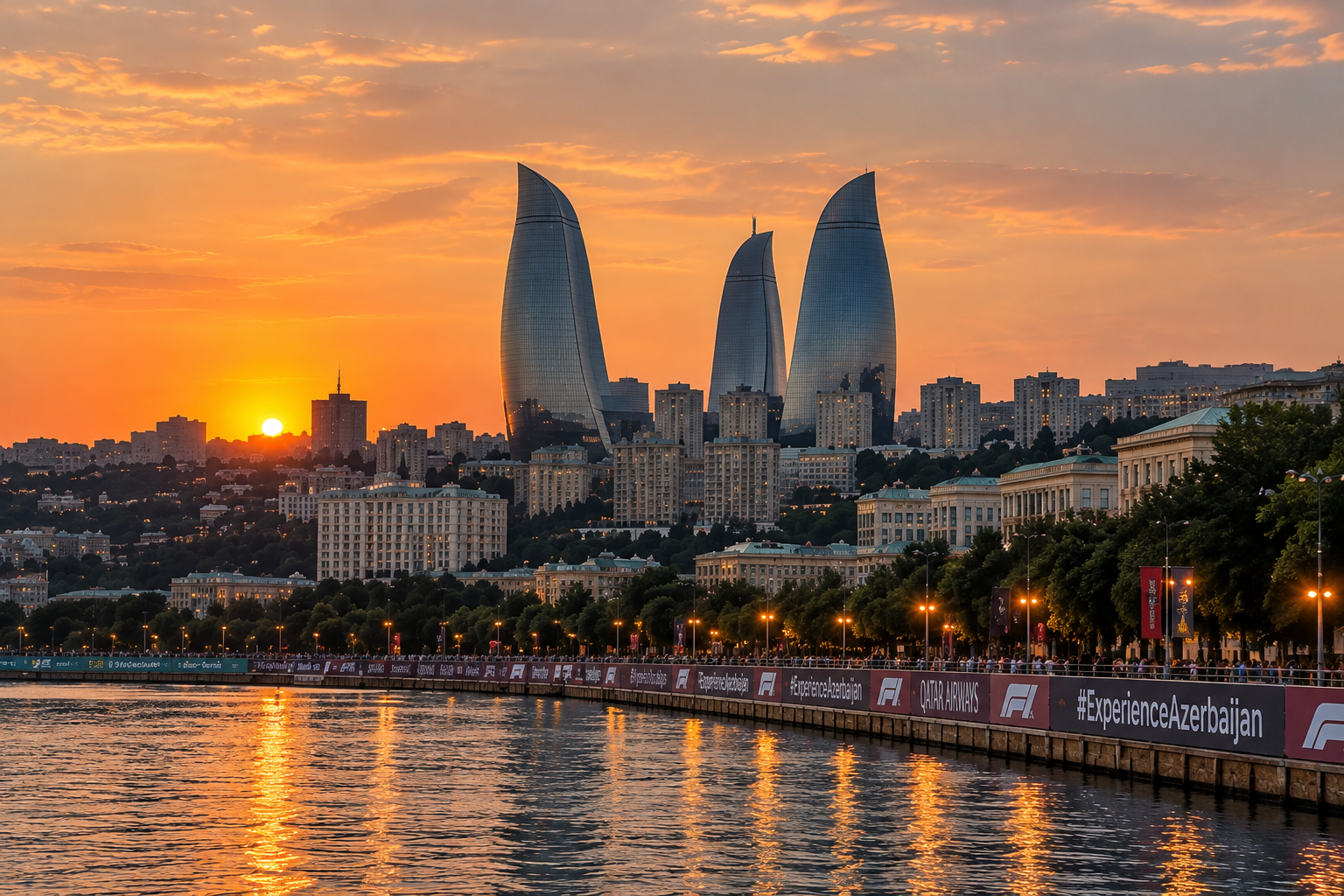
Watching Baku from Las Vegas, I kept thinking about our own Grand Prix.
The two cities couldn't look more different.
One gives us medieval walls along the Caspian Sea.
The other gives us neon, resorts and the Las Vegas Strip.
But they share something that I think makes city races extraordinary:
the destination becomes part of the Formula 1 experience.
You're not simply watching cars circulate around a racetrack.
You're watching Formula 1 take over a city.
Architecture becomes scenery. Streets become corners. Hotels, balconies and buildings suddenly become viewing locations. Places people pass every day become part of a global sporting event.
Baku understood that beautifully.
And ten years later, the Azerbaijan Grand Prix doesn't feel like the new race anymore.
It feels like Baku.
The castle.
The walls.
The speed.
The Safety Cars.
The unpredictability.
And today, an unbelievable fight all the way to the final lap.
Congratulations to George Russell and Mercedes. That one was earned.
And happy 10 years, Baku.
From one Formula 1 city to another, Las Vegas is watching. 🏁